

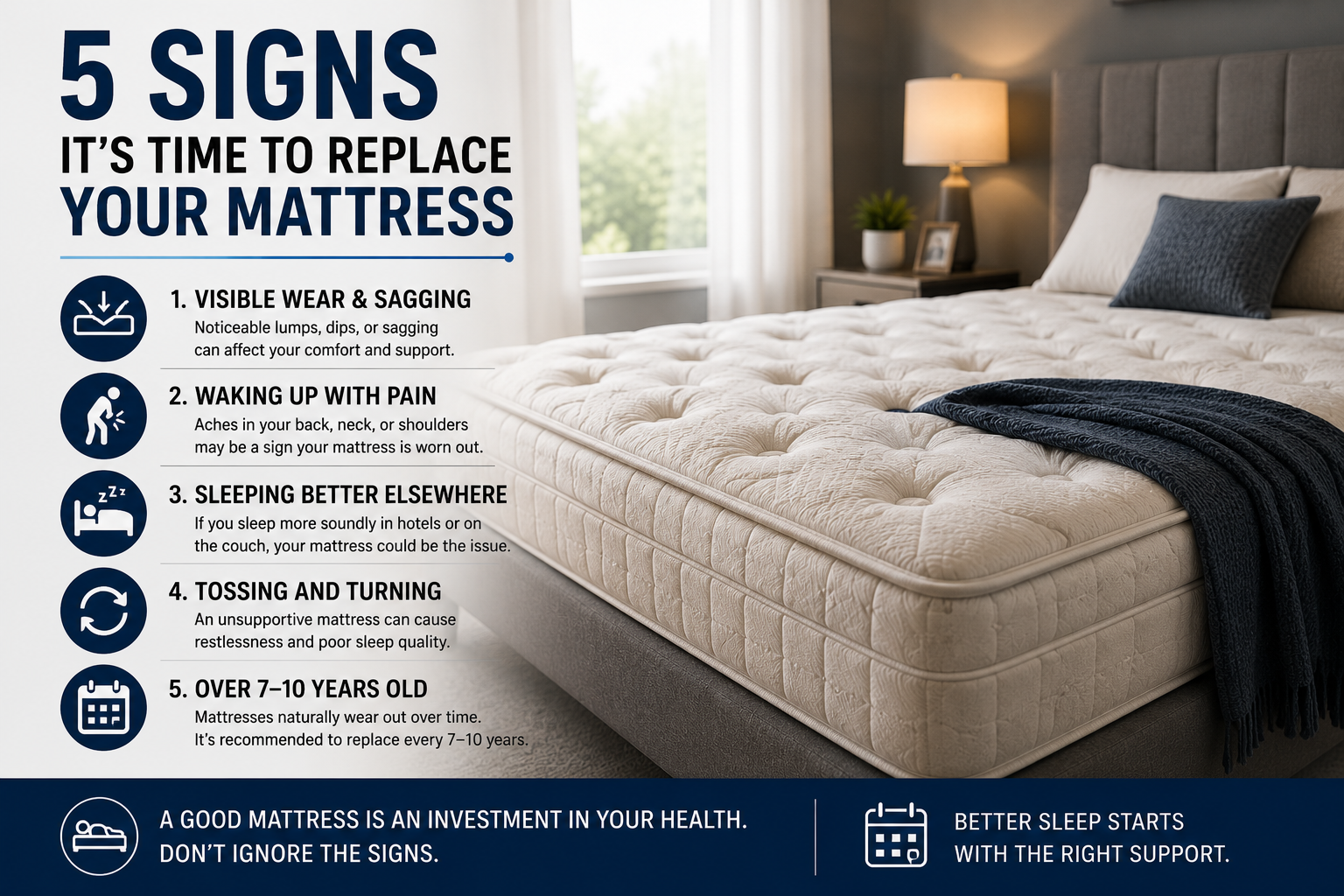
Many people continue sleeping on a mattress long after it has lost its ability to provide proper support and comfort. Recognizing the warning signs of an aging mattress can help improve your sleep quality, reduce aches and pains, and support your overall health.
Introduction
Your mattress plays a critical role in your sleep quality, overall health, and daily comfort. While many people hold onto their mattresses for years, even the highest-quality mattress will eventually wear out.
An aging mattress may contribute to poor sleep, aches and pains, and reduced support throughout the night.
If you’ve been waking up feeling tired or uncomfortable, your mattress may be trying to tell you something. Here are five signs that it may be time to replace your mattress.
1. You Wake Up with Aches and Pains
One of the most common signs of a worn-out mattress is waking up with pain or stiffness.
You may experience:
- Lower back pain
- Neck discomfort
- Shoulder pain
- Hip pain
- General stiffness
As mattresses age, they lose their ability to properly support the body and maintain spinal alignment. When support breaks down, pressure points can develop and contribute to discomfort.
If your aches seem to improve throughout the day, your mattress may be part of the problem.
2. Your Mattress Shows Visible Signs of Wear
Take a close look at your mattress.
Do you notice:
- Sagging areas
- Body impressions
- Lumps
- Uneven surfaces
- Damaged edges
Visible wear often indicates that the internal materials are beginning to break down.
Even if the mattress still feels comfortable at first, structural deterioration can negatively affect support and sleep quality over time.
A mattress should provide a consistent sleeping surface. When it no longer does, replacement may be necessary.
3. You’re Sleeping Better Somewhere Else
Have you ever stayed at a hotel, visited family, or slept in a guest room and found yourself sleeping better than you do at home?
This can be a major clue.
Many people become accustomed to gradual mattress deterioration and don’t realize how much it is affecting their sleep until they experience a different sleeping surface.
If you consistently sleep better away from home, it may be worth evaluating whether your mattress is contributing to the problem.
4. You Toss and Turn Throughout the Night
Frequent movement during sleep may indicate discomfort.
If you find yourself:
- Constantly changing positions
- Struggling to get comfortable
- Waking multiple times each night
your mattress may no longer be providing adequate support or pressure relief.
A quality mattress should help you remain comfortable throughout the night, reducing the need for constant adjustments.
Poor comfort can interrupt sleep cycles and reduce the restorative benefits of sleep.
5. Your Mattress Is More Than 7–10 Years Old
While mattress lifespan varies depending on construction, materials, and usage, many mattresses begin to lose performance after approximately 7–10 years.
Factors that affect longevity include:
- Mattress quality
- Body weight
- Sleep habits
- Mattress type
- Maintenance
Even if your mattress appears to be in good condition, aging materials may not provide the same level of support and comfort they once did.
If your mattress is approaching or exceeding this age range, it may be time to begin exploring replacement options.
Why Replacing Your Mattress Matters
Sleep is one of the most important components of overall health.
A supportive mattress may help improve:
- Sleep quality
- Comfort
- Energy levels
- Recovery
- Mood
- Daily performance
Many people are surprised by how much better they feel after replacing an old mattress.
How to Choose a Replacement Mattress
When shopping for a new mattress, consider:
Your Sleeping Position
Different sleep positions often require different levels of support and pressure relief.
Comfort Preferences
Some sleepers prefer a soft, contouring feel while others prefer a firmer, more supportive surface.
Temperature Regulation
Hot sleepers may benefit from mattresses designed to promote airflow and cooling.
Motion Isolation
Couples often appreciate mattresses that minimize movement transfer.
Support and Durability
Look for quality materials and strong support systems designed for long-term performance.
Final Thoughts
A mattress is an investment in your health and well-being.
If you’re experiencing discomfort, poor sleep quality, visible mattress wear, or your mattress is more than a decade old, it may be time to consider a replacement.
The right mattress can help improve sleep quality, reduce discomfort, and support healthier, more restorative rest.
Need Help Finding the Right Mattress?
At Better Sleep Solutions, we help consumers understand their options and make informed mattress-buying decisions.
Whether you’re replacing an aging mattress or shopping for your first premium sleep system, our educational resources can help you find the solution that best fits your sleep needs.
Leave a Reply