

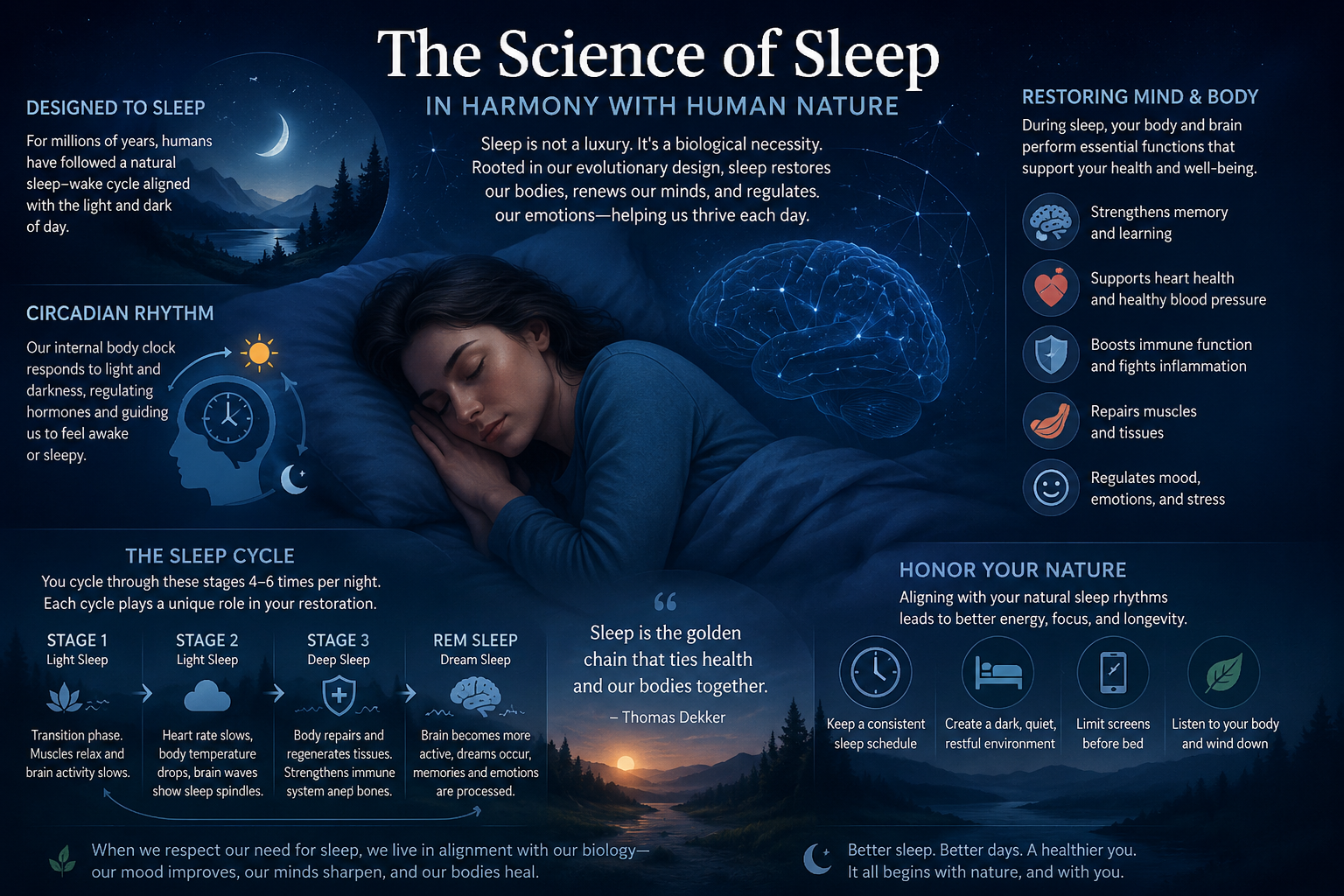
Sleep is one of the most important biological processes in the human body. Although it may seem like we’re simply resting, our brains and bodies remain incredibly active throughout the night. During sleep, we cycle through several distinct stages that support physical recovery, memory formation, emotional well-being, and overall health.
A typical night of sleep consists of multiple sleep cycles, each lasting approximately 90 to 120 minutes. Within each cycle, we move through four stages of sleep, including three stages of Non-Rapid Eye Movement (NREM) sleep and one stage of Rapid Eye Movement (REM) sleep.
Why Sleep Cycles Matter
Each stage of sleep serves a different purpose. Missing or disrupting certain stages can affect everything from energy levels and concentration to physical recovery and emotional health.
Throughout the night, your body naturally progresses through these stages multiple times, with deeper sleep occurring more frequently during the first half of the night and REM sleep becoming longer toward the morning.
Stage 1: Light Sleep (NREM Stage 1)
Stage 1 is the transition between wakefulness and sleep. This stage usually lasts only a few minutes and represents the beginning of the sleep cycle.
What Happens During Stage 1?
- Heart rate begins to slow
- Breathing becomes more regular
- Eye movements slow down
- Muscles begin to relax
- Brain activity starts to decrease
Many people experience sudden muscle jerks or the sensation of falling during this stage. These are known as hypnic jerks and are completely normal.
Why Is Stage 1 Important?
Although brief, Stage 1 serves as the gateway into deeper sleep. It allows the body and brain to begin transitioning away from wakefulness.
Stage 2: Light Sleep (NREM Stage 2)
Stage 2 is where we spend the majority of our sleep time. In fact, most adults spend approximately 45% to 55% of their total sleep in this stage.
What Happens During Stage 2?
- Body temperature drops
- Heart rate slows further
- Breathing becomes steady
- Eye movements stop
- Muscles continue relaxing
- Brain waves slow significantly
During Stage 2, the brain produces unique electrical patterns known as sleep spindles and K-complexes. Researchers believe these play important roles in learning, memory, and information processing.
Why Is Stage 2 Important?
Stage 2 helps prepare the body for deeper restorative sleep and supports memory consolidation and cognitive function.
Stage 3: Deep Sleep (NREM Stage 3)
Stage 3 is often referred to as deep sleep, slow-wave sleep, or restorative sleep. This is considered one of the most physically important stages of sleep.
What Happens During Stage 3?
- Blood pressure decreases
- Breathing slows
- Heart rate reaches its lowest levels
- Growth hormone is released
- Muscles repair and recover
- Tissue growth and repair occur
- Immune system activity increases
During deep sleep, the brain produces slow delta waves, which are the slowest brain waves observed during sleep.
Why Is Deep Sleep So Important?
Deep sleep is responsible for much of the body’s physical recovery.
Benefits include:
- Muscle recovery
- Tissue repair
- Immune system strengthening
- Energy restoration
- Hormonal regulation
People who are deprived of deep sleep often wake feeling physically exhausted, even after spending many hours in bed.
Stage 4: REM Sleep (Rapid Eye Movement)
REM sleep is often called the “dream stage” because most vivid dreaming occurs during this phase.
Interestingly, while the body becomes temporarily paralyzed to prevent acting out dreams, the brain becomes highly active.
What Happens During REM Sleep?
- Rapid eye movements occur beneath closed eyelids
- Brain activity increases dramatically
- Dreams become vivid and complex
- Memory processing occurs
- Emotional regulation takes place
- Learning and creativity are enhanced
During REM sleep, certain areas of the brain can become nearly as active as they are during wakefulness.
Why Is REM Sleep Important?
REM sleep plays a crucial role in:
- Learning
- Memory consolidation
- Emotional processing
- Problem-solving
- Creativity
- Mental health
Research suggests REM sleep helps the brain process experiences and emotions from the day while strengthening important memories.
What Happens Over the Course of the Night?
Sleep cycles repeat throughout the night.
During the first half of the night:
- More deep sleep occurs
- Physical recovery is emphasized
During the second half of the night:
- REM periods become longer
- Mental and emotional processing increase
This is why both sleep quality and sleep duration are important. Cutting sleep short may significantly reduce the amount of REM sleep your body receives.
The Role of Your Sleep Environment
Even though sleep stages occur naturally, your sleep environment can influence how effectively your body moves through them.
Factors that support healthy sleep include:
- A supportive mattress
- A comfortable pillow
- Proper spinal alignment
- A cool bedroom temperature
- Reduced noise and light
- Consistent sleep schedules
When your sleep environment is optimized, your body can spend more time in the restorative stages that promote recovery and overall well-being.
Final Thoughts
Sleep is far more than simply resting. Every night, your brain and body perform essential functions that support physical recovery, memory, emotional health, immune function, and overall wellness.
Understanding the stages of sleep can help you appreciate why quality sleep is so important and why investing in healthy sleep habits and proper sleep support may have a profound impact on your daily life.
Leave a Reply