

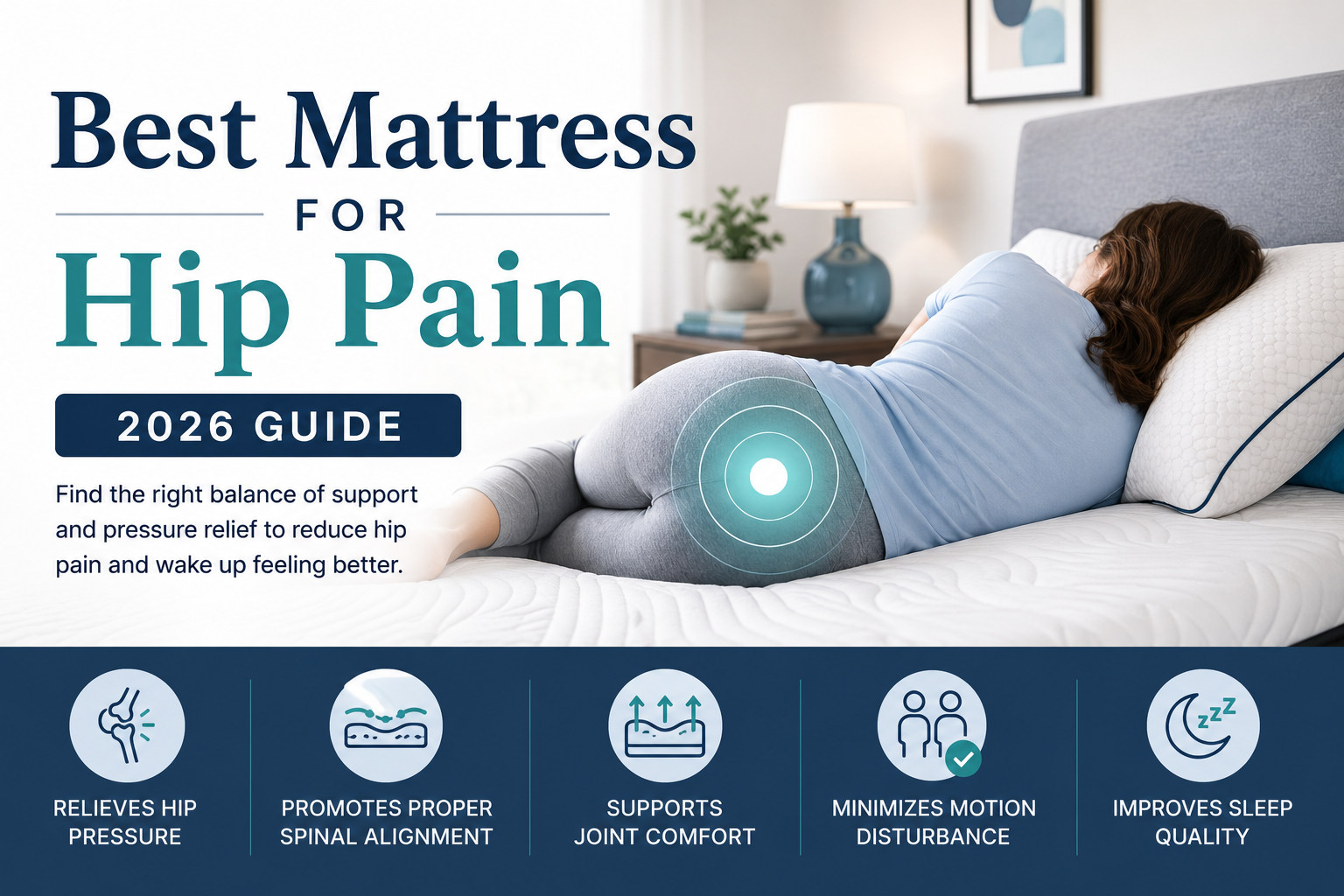
Introduction
Hip pain can make it difficult to fall asleep, stay asleep, and wake up feeling refreshed. Whether your discomfort is caused by arthritis, bursitis, injury, inflammation, or pressure points from side sleeping, the right mattress can make a significant difference in your comfort and recovery.
A mattress that properly supports spinal alignment while relieving pressure around the hips can help reduce pain, improve sleep quality, and allow your body to recover overnight. In this guide, we’ll explain what to look for in a mattress if you suffer from hip pain and how to choose the best option for your individual needs.
Why Your Mattress Matters for Hip Pain
Your hips are one of the body’s primary pressure points during sleep, especially for side sleepers. When a mattress is too firm, excessive pressure can build around the hip joint. When a mattress is too soft, your hips may sink too deeply, causing poor spinal alignment.
Both situations can contribute to:
- Increased hip pain
- Lower back pain
- Stiffness upon waking
- Tossing and turning
- Poor sleep quality
The goal is to find a mattress that balances support and pressure relief.
Common Causes of Hip Pain During Sleep
Many conditions can contribute to nighttime hip discomfort:
Arthritis
Inflammation within the hip joint can cause pain that worsens during periods of inactivity.
Bursitis
Inflammation of the fluid-filled sacs that cushion the hip joint can make sleeping on one side uncomfortable.
Injury or Overuse
Previous injuries, repetitive motion, or athletic activity may contribute to hip pain.
Poor Mattress Support
An aging or unsupportive mattress can place excess stress on the hips and lower back.
What to Look for in a Mattress for Hip Pain
Pressure Relief
The best mattresses for hip pain distribute body weight evenly and reduce pressure buildup around sensitive joints.
Look for materials such as:
- Memory foam
- Advanced pressure-relieving foam
- High-quality hybrid comfort layers
Proper Spinal Alignment
A mattress should keep your spine in a neutral position throughout the night.
When your hips sink too deeply or remain elevated, it can increase strain on both the hips and lower back.
Motion Isolation
If you sleep with a partner, strong motion isolation can help minimize sleep disruptions that may aggravate pain.
Durability
Long-lasting support is essential. As mattresses wear out, they often develop impressions that can worsen hip discomfort.
Best Mattress Types for Hip Pain
Memory Foam Mattresses
Memory foam is often recommended for individuals with hip pain because it contours closely to the body and relieves pressure points.
Benefits include:
- Excellent pressure relief
- Reduced joint stress
- Strong motion isolation
Potential drawback:
- Some people find traditional memory foam sleeps warm.
Hybrid Mattresses
Hybrid mattresses combine supportive coils with pressure-relieving comfort layers.
Benefits include:
- Balanced support
- Improved airflow
- Excellent pressure relief
- Easier movement during sleep
Many sleepers with hip pain find hybrids provide an ideal balance of comfort and support.
Latex Mattresses
Natural latex offers pressure relief while maintaining a responsive feel.
Benefits include:
- Durability
- Breathability
- Consistent support
Some sleepers prefer latex because it provides cushioning without the “sinking” sensation associated with memory foam.
Mattress Firmness Recommendations
Side Sleepers
Recommended firmness:
Medium to Medium-Soft
Side sleepers typically need additional pressure relief around the hips and shoulders.
Back Sleepers
Recommended firmness:
Medium to Medium-Firm
Back sleepers often benefit from slightly firmer support to maintain proper alignment.
Combination Sleepers
Recommended firmness:
Medium
A balanced feel can accommodate multiple sleeping positions throughout the night.
Can an Adjustable Base Help Hip Pain?
In many cases, yes.
Adjustable bases allow sleepers to elevate their upper body and legs, helping reduce pressure on the lower back and hips.
Potential benefits include:
- Reduced joint pressure
- Improved circulation
- Easier position adjustments
- Enhanced overall comfort
Many individuals experiencing chronic pain find adjustable bases provide significant relief when paired with the right mattress.
Additional Tips for Managing Hip Pain While Sleeping
Use a Pillow Between Your Knees
Side sleepers often benefit from placing a pillow between their knees to improve hip alignment.
Maintain a Healthy Sleep Position
Sleeping in positions that keep your spine aligned may help reduce stress on the hips.
Replace an Aging Mattress
If your mattress is more than 8-10 years old and showing signs of wear, it may no longer provide adequate support.
Consult Your Healthcare Provider
Persistent or worsening hip pain should be evaluated by a qualified healthcare professional.
Signs Your Mattress May Be Causing Hip Pain
Your mattress may be contributing to discomfort if:
- You wake up with hip pain regularly
- Pain improves throughout the day
- You sleep better away from home
- Your mattress has visible sagging
- You frequently toss and turn
These signs may indicate that your mattress is no longer supporting your body properly.
Final Thoughts
Hip pain can significantly affect sleep quality and overall well-being. Choosing a mattress that provides proper support, pressure relief, and spinal alignment can help reduce discomfort and improve your ability to rest comfortably throughout the night.
Whether you prefer memory foam, hybrid, or latex construction, the right mattress can make a meaningful difference in how you sleep and feel each day.
If you’re currently experiencing hip pain and suspect your mattress may be contributing to the problem, evaluating your sleep surface could be one of the most important steps toward better sleep and improved comfort.
Leave a Reply